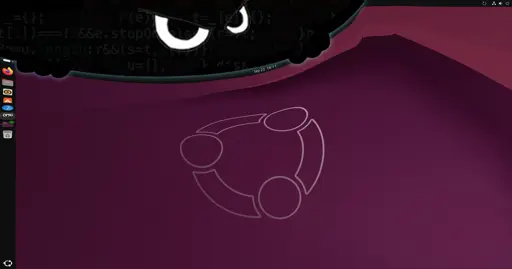
What could go wrong?
Every time Ubuntu comes with a new "feature* I’m reminded why I quit them after Amazon-gate.
Debian and Cachyos all the way
Nice, now also AI slop and vibe coding is invading Linux, too tentative for small teams and indie diestros, when even bigger ones fall in the trap (AlternativeTo list of OpenSource slopware- 5+ pages, list of no AI soft, OpenSource and proprietary -<2 pages). Sad

I was trying to dual boot NetBSD into my system. But I just gave up.

Who the hell is still using Ubuntu!? Stop it. There is no good reason. Everything Ubuntu does is an anti pattern, that makes you a lot worse off than if you had just used Debian with flat packs. Need system stability? Thats what immutable is for. Do shit in user land, don’t touch system files if you don’t know what you’re doing. There are no reasons to use Ubuntu.
Meanwhile in the real world…
Of course there are countless reasons why to use Ubuntu or one of it’s derivatives but taking that notion to mind would go against the hype train
No, I’m in no way saying that what canonical is doing is right, I’m saying there is a huge difference between “they’re doing something wrong, again” and “there are no reasons to use this, everyone please agree with me”
Derivatives of ubuntu…? You mean debian without gnome right?
While you’re in the real world, could you bring back a few of those countless reasons you talked about? I’d like 10 if they’re countless, and you didn’t bring any at all in your first comment
Some Years ago I tried Ubuntu (long before AI) and certainly a not so good and buggy experience, after this, a month later and the own Compiz killed my Desktop, I switched to Kubuntu, a light year more stable and better Fork by KDE. Mint and Q4OS are also nice (Debian)
TIHI
I guess I’ll unsubscribe from PRO. Thanks for the info!
High up the distros to avoid list.
Sadly the only distro I’ve been able to get working on my refurbished rugged dell 5420… (18.04 so I’m having to rely on their pro subscription (free) for security updates but I’m not turning on that new source for sure) Otherwise I’d be on windows 11 so even Ubuntu is a win as this is essentially just a thin client anyway.
Have you tried NixOS?
Thats just the regular latitude laptops the rugged line is named the same but different hardware. Just tried Arch and I barely got to the initial install console before the kernel crashed.
I did wonder, assumed/hoped it might have just been a rugged case with everything else the same. Consider manjaro. No idea what you have tried already, but downloading and installing doesn’t take long.
I’ll give manjaro a shot for shits and giggles but at this point I’ll focus on trying out different drivers since every distro with a kernel version over 4 has used the same one.
But yeah, the rugged line is pretty different than the latitudes. Dual batteries, different sunlight readable display, serial connectors, dual Ethernet, a frigin stylus?! and a few other things.
I have found a lot of people having similar issues with 7th-ish gen Intel iGPUs so I think it’s more of a chipset incompatibility than anything else. Plus Dell officially supported Ubuntu 18.04 so I’m not surprised that it has a working kernel version. I just want all my servers and devices to run on the same OS if at all possible (at least Ubuntu and Debian are pretty darn similar for most things)
indeed they are, they are both very pro ai :P
debian was the worst one for my i7 4770, I ended up using a script to install it, something I didn’t even come close to with dozens of other os’s. no issues installing debian on my amd system, it was still a somewhat annoying os though, as much as I wanted to like it, but then they did their fake ai vote, and I flushed it.
with your niche hardware, hopefully you just find something that works
I think I saw you post about this the other day, and I wanted to ask you if you had tried older builds of fedora. Or Debian
The ESM model for debian and no LTS on fedora won’t work for my uses sadly. If I go far enough to get to the right kernel version I lose basic security updates.
Gonna try messing around more with driver options today so maybe I can get back on the Debian train.
Could you not just compile the kernel etc for your hardware?
Alternatively. Arch posts support for the 5420 on their wiki.
Arch BTW…
A little known distro, because most people are too shy to admit they are using it. 😋
Ubuntu is definitely better than Windows.
But being allergic to the shenanigans of Windows and Microsoft, makes one very cautious of the practices of Ubuntu and Canonical.
It kind of smells the same, although the reek from Windows is stronger.Why not use an Ubuntu spin that doesn’t pick all the upstream bs? Not sure if Pop_OS, Mint, or Zorin will be free from the AI crap, but I know spins like Pop exist because they don’t like 100% of what Ubuntu is doing
One of those things is not like the others. Zorin keeps all the crap and slaps more extensions on it.
I wonder why for example Mint would not work when Ubuntu does.
Hold up, forget the ai factor for a second… They’re putting security fixes behind a paywall? The thing you get free with every other distro? That’s the big business plan?
No, they backport security fixes. That’s what you pay for.
This. Ubuntu sucks but this isn’t the reason.
I guess they really want professionals to pay for Pro - I just looked it up recently, and Pro is free for up to 5 machines. Still scummy but just wanted to include that nuance
You get 5 years of updates on the regular LTS releases and then 5 more years for free (up to 5 machines) with the ESM Ubuntu pro subscriptions before needing to pay for the legacy coverage that does cost money.
So I can see this being reasonable considering no other distro offers 15 years of support.
You get 5 years of updates on the regular LTS releases
But IIRC not every package in the distro, but rather a part of them.
Edit: Details here
The way you describe it does sound like a good thing. However considering every distro offers free upgrades to their next supported version the advantages are somewhat moot.
Not if you have thousands of desktops and multiple legacy servers that only work running on that OS that either needs to be updated or you need to thoroughly test each service on those servers to ensure they will work on a new OS.
It is a good thing, just not for home users. 15 year of support is very much a big selling point for enterprise users.