- 15 Posts
- 117 Comments

 4·8 days ago
I have a suggestion that is not FOSS, but it is privately held so the pressure to be profitable each quarter is not at all the same as publicly held companies.
Check out the privacy policies of LingQ and Rosetta Stone. Idk if they’re good, but I know they’re the most efficient language-learning apps right now. They require the least amount of minutes using them to achieve the highest scores in standardized language tests.
 11·17 days ago
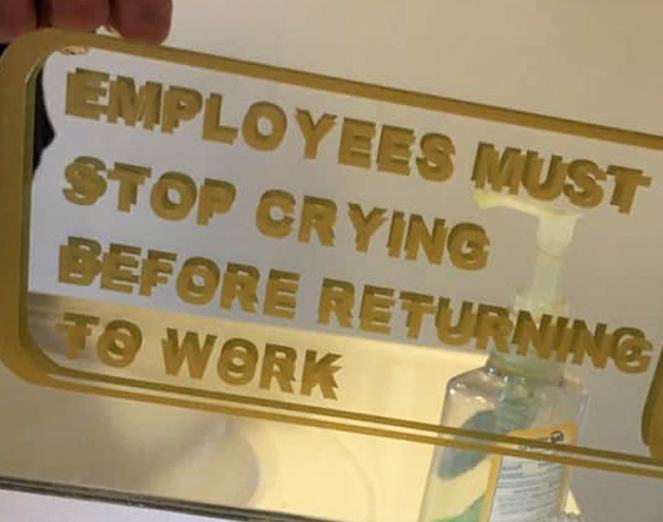
If words are hard, maybe collage can help
 4·1 month ago
I am assuming you’re 95% trolling.
You want a generation of young men committing suicide because of not feeling enough? Then emphasize being the best. Don’t value people’s way of being. Don’t value what kind of person people are.
If, however, you care about people living good lives, focus on building capabilities. The single most important capability is being resilient in the face of failure and rejection.
You will be shocked by learning that there is a thing called science that has consistently found a set of robust findings. One of them is that accepting your life is a pre-requisite for resilience. Another is finding how important it is to infuse your current reality with purpose and meaning so that you can take steps toward the life you want.
You know what stops people from accepting their reality and infusing their current steps with purpose? Telling them they’re unacceptable.
Yes. And nobody should do it. It gets people’s blood pressure up. It makes people salivate. It gets people jealous. Everyone’s looking at me trying to understand why I’m enjoying my pasta so much.
 23·2 months ago
I remember reading that commute time is the number one predictor for leaving a job. I wonder what the evidence would show if I properly looked it up.
I hope someday any normal Linux software will be usable in Apple hardware. Unfortunately, there are hurdles.
One of the biggest hurdles was getting code accepted into the Linux kernel.
This became very frustrating for the previous Asahi Linux lead developer. He would push upstream code and the Linux developers would not accept it.
Why didn’t they accept it? Because it was written in memory-safe Rust and not in memory-unsafe C. Old Linux developers don’t want to deal with Rust. So they just refuse to include Asahi Linux updates into normal Linux software.

It’s a meme of sorts. Some time ago, someone sent that message again and again to lots of people.
This totally happens in code where functions have plenty of side effects. And thats why functional programming can lead to fearless refactoring!

There is a group that does studies on different apps. They look at how much time people spend using a language-learning app and how much each minute of studying adds to a standardized language test. Turns out, Rosetta Stone and LingQ are the most efficient per minute spent in those apps. If I remember correctly, both are privately held companies, which I see as a better sign than Duolingo’s public listing. I don’t know about their privacy policies, though.
 2·4 months ago
Thanks for pointing that out. Indeed the goal is to make a fair comparison. Here’s a better image:

I agree with you and think it’s worthwhile to critically evaluate fonts.
So what happens if we evaluate cursive font? Well, for most people, loopy cursive is hard to read.
To understand why loopy cursive is problematic, here’s an excerpt from two experts on handwriting:
Conventional looped cursive has not held up to modern life and is being abandoned by most adults, because
- Its decorative loops and excessive joins obscure visual cues,
- It loses legibility when written quickly,
- It doesn’t reflect the writing we see in type or on screen, and
- 100% joined writing is typically slower and no more legible than writing that joins most, but not all letters.
So loopy cursive sucks, but does that mean that we should straight up ditch cursive altogether? Are there fonts that are quick to write and legible? Turns out, those same experts built a handwriting system, the Getty-Dubay system. Their writing system does not seek to “look pretty and fancy-pants” (to quote you). Instead, their writing system tries to “communicate clearly” (to quote you again). They built something logical and pragmatic.
How can you be sure of what I’m saying? Well, you be the judge!
Here’s a picture of the Getty-Dubay fonts, both print and cursive:

Here’s a comparison of different cursive fonts:

If you want more information, here’s a resource you can check out: https://handwritingsuccess.com/why-cursive/
So yeah, the way I see it, loopy cursive is hell, and italic-based cursive is the best of both worlds: italic-based cursive is fast to write and easy to read.
and that “most mainstream scholars of the era” agree with OP
This study is from 2015.
Right?
I think it’s exactly a decade later, 2025. https://budgetlab.yale.edu/research/evaluating-impact-ai-labor-market-current-state-affairs
 11·7 months ago
Do you know about Cynefin? Would you disagree if I say that religion is a complex Cynefin system and therefore can’t be entirely predictable? Would you say Lutheranism and the Theology of Liberation are equally as problematic as the KKK and Nazis?
 5·7 months ago
As the other comment says, Anki already changes dynamically so that you study the hard stuff more. Just make sure to mark whether you got the answer and how hard it was to get it.
Now, here’s something that could help you, perhaps more than any multiple choice exam could ever help you with: when studying, make sure to not only blurt the answer but also use elaborative recall. In other words, make an effort to think and do so mindfully (rather than mindlessly).
Why? You learn through effort and through mindfully (and not mindlessly) connecting the new knowledge with what you already know.
You could even structure your elaborative recall through Visible Thinking Routines.
How does that look like?
- You start your study session.
- You get an Anki card.
- You remember this card clearly, and so you say it out loud and then check.
- You get it right. No need for elaborative recall. Better to focus your energy elsewhere.
- You get another Anki card.
- This one’s tough. You’re unsure.
- You say out loud why it could be any of the two answers you think could be right.
- You get the answer and sure enough it was one of the two you thought.
- You decide to do elaborative recall so that you learn this well. To guide your elaborative recall, you decide to use the thinking routine “Connect-Extend-Challenge”.
- So you do elaborative recall through a thinking routine. You do it by talking out loud or writing it out.
- This step may sound silly but make sure to celebrate so that you feel pride and satisfaction for doing something that takes effort (especially if you’re struggling with the habit of studying).
- Then you move on to the next Anki card.
The problem you’re describing (open sourcing critical software) could both increase the capabilities of adversaries and also make it easier for adversaries to search for exploits. Open sourcing defeats security by obscurity.
Leaving security by obscurity aside could be seen as a loss, but it’s important to note what is gained in the process. Most security researchers today advocate against relying on security by obscurity, and instead focus on security by design and open security. Why?
Security by obscurity in the digital world is very easily defeated. It’s easy to copy and paste supposedly secure codes. It’s easy to smuggle supposedly secret code. “Today’s NSA secrets become tomorrow’s PhD theses and the next day’s hacker tools.”
What’s the alternative for the military? If you rely on security by design and open security for military equipment, it’s possible that adversaries will get a hold of the software, but they will get a hold of software that is more secure. A way to look at it is that all the doors are locked. On the other hand, insecure software leaves supposedly secret doors open. Those doors can be easily bashed by adversaries. So much for trying to get the upper hand.
The choice between (1) security by obscurity and (2) security by design and open security is ultimately the choice between (1) insecurity for all and (2) security for all. Security for all would be my choice, every time. I want my transit infrastructure to be safe. I want my phone to be safe. I want my election-related software to be safe. I want safe and reliable software. If someone is waging a war, they’re going to have to use methods that can actually create a technical asymmetry of power, and insecure software is not the way to gain the upper hand.
We share the goal of making the world more private. I’m not trying to be cheeky or mean. I’m genuinely curious. Would you be against reading to learn how to talk more compellingly?
Omg I just squinted and saw the pirate ships. Thanks for your contribution.







Yeah, the green number shows the improvement, and Babbel users improved more. What the green number doesn’t tell you is how much time it took to get there. If you look at that, Babbel is more inefficient than LingQ and Rosetta Stone.