

8·
1 day agoI hope he’s right
I hope he’s right
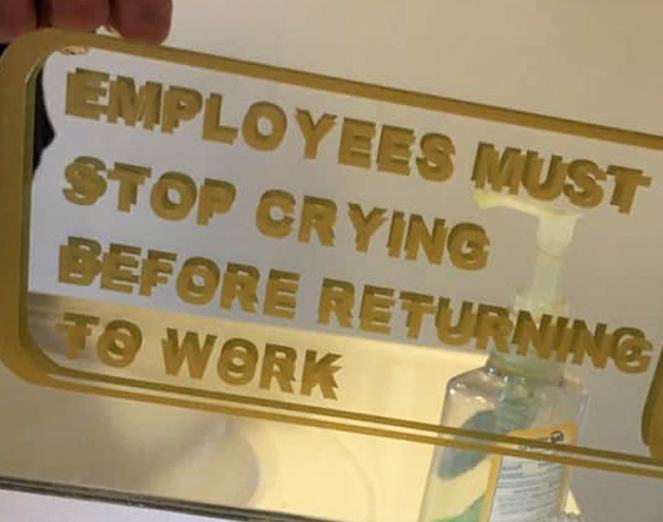
And this despite giving billionaires everything they asked for including the tax breaks that created them in the first place.
Guillotines for a better America
I’m old enough to remember people lying that compact discs were practically indestructible.
I think the early rounds of those trying to get people to switch to the format were motivated by the fact that tapes were easily recordable by everyone.
Also like solar wind and water power also involve science? As do coal plants? So like, really WTF are we even talking about with science “functioning”?
Edit: Seems like this is just the potato version of the “science is what’s true whether or not you believe it” quote applied to policy…which actually doesn’t work.
It doesn’t matter whether or not nuclear plants are possible if humans don’t build them. The science backing them existing is meaningless.
It’s almost like…one is the leader of the richest country in the world and the other is running a government office that’s dismantling the government.
Seriously, if you guys were alive in the 1930s or 1940s you’d be there like “I just can’t pick up the paper anymore without talk of this Hitler guy!”.
If you limit yourself exclusively to communities where the “no politics” rule is actually enforced, you’ll exhaust new content within about two minutes each day.
It’s almost like US politics are a historic fucking shit show and that affects many other things.
Yeah I guess I left out “lottery winner”
It’s simple to be successful:
have rich parents that can give you money
have easy access to loan programs because you’re white and have rich parents
It didn’t have to be this way; in a different kind of society it could have been a boon to everyone.
Please continue to espouse this viewpoint even under serious argument from those opposing it. Technology isn’t inevitably shit. There are other types of software we can write, and other types of technology we can develop that isn’t the result of some sweaty CTO hovering over our shoulders demanding that we make the world shittier for the sake of the shareholders.
We have to imagine the worlds we could’ve created through better choices. We have to imagine that we can change the course of things.
The overwhelming majority of software ever written is fucking terrible and causes more problems than it solves.
Since software is easily copiable and mutable, that small sliver of good software gets replicated all over the place and serves as a foundation for other software, both good – and at the risk of repeating myself – and mostly bad.
People would be better off considering new tech as the tool it is rather than seeing every piece of software as inherently better than the thing it replaces.

Love it.
Maybe optimize your fucking code you bunch of stupid losers.
That wouldn’t allow him to also simultaneously pay low wages.
Eventually the only way rich people can get richer is by stealing from other rich people because the economy is so heavily weighted toward the rich that there’s just no money to extract from the poor. I think that’s related to what we’re seeing here … And probably everywhere else as well.
Is that what the “you can’t download your shit anymore” is really reaching at?

That’s becoming alarmingly common, and I’d like to see it go away entirely.
Random question: do you happen to be downloading all of your Kindle books? 😜
Right back at ya bitch
That manual correction: installing Linux.
How this is called that when “lemmygetnaked” would’ve been infinitely better I’ll never know…

I remember having a cd player with a skip buffer in it. Still didn’t really work for running like you’re saying but at least I could bounce around on the bus to and from school without it constantly skipping.