You are correct to point out the distinction between race conditions and data races. Rust only rules out data races.
I don’t know whether the race in question was a data race or not.
I would still wager that Rust code generally has fewer race conditions than C, given that mutable aliasing can be used as symbolic prevention of race conditions, i.e. your &mut T doesn’t necessarily need to hold data; it can represent some domain concept.
aren’t language specific
There are actually languages that guarantee deterministic concurrent execution, and this can rule out larger classes of race conditions than just data races. See the Bloom language and CALM theorem.


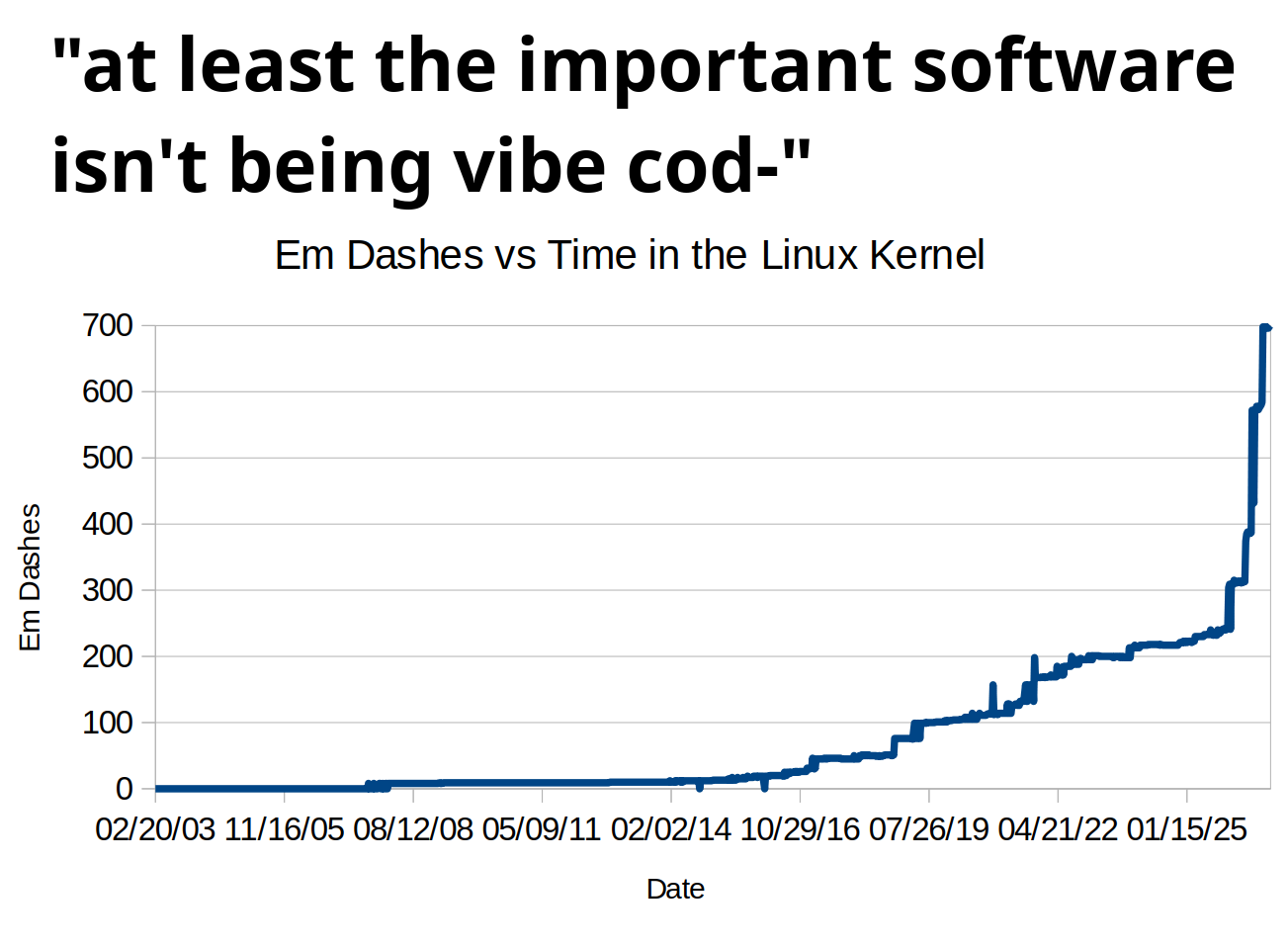
I could attribute the race condition just as much to their use of the C language as to AI.
Race conditions I’m pretty sure aren’t language specific. Rust can have them too.
You are correct to point out the distinction between race conditions and data races. Rust only rules out data races.
I don’t know whether the race in question was a data race or not.
I would still wager that Rust code generally has fewer race conditions than C, given that mutable aliasing can be used as symbolic prevention of race conditions, i.e. your
&mut Tdoesn’t necessarily need to hold data; it can represent some domain concept.There are actually languages that guarantee deterministic concurrent execution, and this can rule out larger classes of race conditions than just data races. See the Bloom language and CALM theorem.
Yes, but the tools provided by Rust:
unsafe {}block to be used.