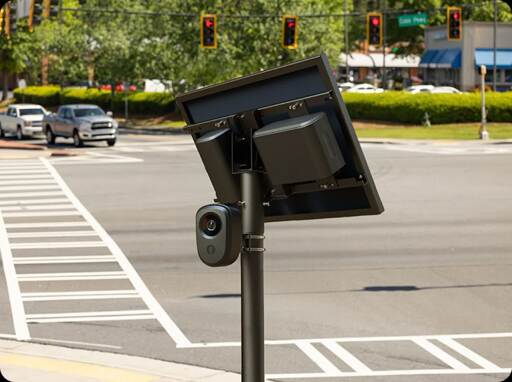
News 6 Orlando reports that police in Oviedo, Florida, have charged a man with three felonies for destroying a Flock surveillance camera, even though the camera was...
That’s been on my mind a bit. It’s not a foolproof way to do this though, as you’d likely need to:
Do a ukrainian style one way mission. The materials used in it could be led back to you through purchases, fingerprints, or DNA.
Be nearby the drone and control it as it flies in. You could be seen nearby though, and your controller’s signals could be located.
Use an FPV drone to see from the drone’s perspective. Though this also has the risk of your controller’s signals being located.
Use a fully autonomous drone that is configured to meet you at a safe location after the mission. This is by far the hardest version to do, and you’d need to do a lot of research + trial and error to ensure edge cases don’t get you caught. What if the drone fails to complete the mission? What if it physically gets captured? What if it is followed?
I think it would definitely be possible to do something like this in theory, but in practice it would be incredibly difficult to do more the once or at scale, and not get caught.
There were some conservation groups doing research on fully autonomous drones that could fly around the Amazon in remote regions to study the wildlife.
I imagine they learned how to nest in trees during high sun to recharge.
I imagine this research is mostly already done. The only thing we need to do is teach it to identify camera lenses.
And occasionally refill its tank with black paint (or, better, cache a hotswappable tank somewhere in a forest and then send an encrypted signal with the coordinates)


That’s been on my mind a bit. It’s not a foolproof way to do this though, as you’d likely need to:
I think it would definitely be possible to do something like this in theory, but in practice it would be incredibly difficult to do more the once or at scale, and not get caught.
There were some conservation groups doing research on fully autonomous drones that could fly around the Amazon in remote regions to study the wildlife.
I imagine they learned how to nest in trees during high sun to recharge.
I imagine this research is mostly already done. The only thing we need to do is teach it to identify camera lenses.
And occasionally refill its tank with black paint (or, better, cache a hotswappable tank somewhere in a forest and then send an encrypted signal with the coordinates)