Not really. Some games are at risk of being removed entirely due to decisions made by brain dead studios etc - in which case pirating is needed to keep it around.
I would rather think games in a way we think about books or other works of art. Preserving games for generations to come is to give them a chance to experience them as well. We still have books around whose authors have died long time ago.
And all of those books are printed with the permission of the author or their estate.
The books are being preserved with the rights holder’s permission, not preserved in spite of them. And yes, plenty of books have gone out of print over the centuries and been lost to time or obscurity. That is unfortunate, but it doesn’t give consumers the authority to decide that someone else’s intellectual property is now theirs to distribute.
Games are no different. Once the rights holder decides they no longer want to sell a game, that’s their decision. You don’t have to like it, but you don’t get to override it simply because you believe the work should remain available.
There is a reason copyright and intellectual-property law works this way. Authors, painters, musicians, developers, and publishers legally own the rights to their creations. Those rights include the ability to decide how, when, and whether their work is reproduced or distributed. The alternative would be giving the public the authority to make those decisions on the creator’s behalf, and that is fundamentally incompatible with the concept of owning intellectual property in the first place.
And believe me, I have very little sympathy for large corporations and their endless pursuit of profit. But even I have to acknowledge that giving a rights holder control over their own property is the more consistent and ethical position. We don’t get to discard someone’s ownership rights simply because we think the public would benefit from having access to their work.
You can absolutely argue that copyright terms are too long, that abandoned works should have a legal preservation exception, or that the law should provide some mechanism for orphaned or commercially unavailable works to remain accessible. Those are legitimate arguments for changing the law.
But that’s fundamentally different from simply deciding that because a company stopped selling something, consumers now have the right to copy and distribute it.


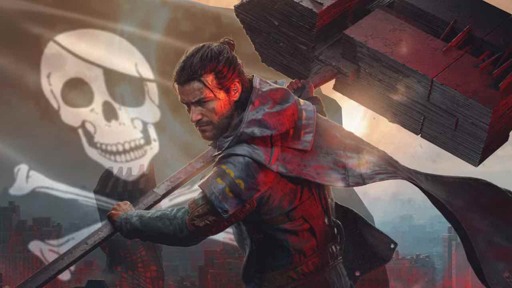
Needs? Games never “needed” to be pirated.
It’s kinda like saying “I needed to rob a bank”
You have a moral obligation to pirate games from shitty companies, ya bozo
I most certainly do not.
Not really. Some games are at risk of being removed entirely due to decisions made by brain dead studios etc - in which case pirating is needed to keep it around.
It’s not. There is no inherent necessity to keep the game around especially if the people who own it no longer want to sell it.
The people that will continue to provide the game are breaking the law by doing so.
So my analogy holds up.
No one “needs” to rob a back. No one “needs” to pirate a game.
I would rather think games in a way we think about books or other works of art. Preserving games for generations to come is to give them a chance to experience them as well. We still have books around whose authors have died long time ago.
And all of those books are printed with the permission of the author or their estate.
The books are being preserved with the rights holder’s permission, not preserved in spite of them. And yes, plenty of books have gone out of print over the centuries and been lost to time or obscurity. That is unfortunate, but it doesn’t give consumers the authority to decide that someone else’s intellectual property is now theirs to distribute.
Games are no different. Once the rights holder decides they no longer want to sell a game, that’s their decision. You don’t have to like it, but you don’t get to override it simply because you believe the work should remain available.
There is a reason copyright and intellectual-property law works this way. Authors, painters, musicians, developers, and publishers legally own the rights to their creations. Those rights include the ability to decide how, when, and whether their work is reproduced or distributed. The alternative would be giving the public the authority to make those decisions on the creator’s behalf, and that is fundamentally incompatible with the concept of owning intellectual property in the first place.
And believe me, I have very little sympathy for large corporations and their endless pursuit of profit. But even I have to acknowledge that giving a rights holder control over their own property is the more consistent and ethical position. We don’t get to discard someone’s ownership rights simply because we think the public would benefit from having access to their work.
You can absolutely argue that copyright terms are too long, that abandoned works should have a legal preservation exception, or that the law should provide some mechanism for orphaned or commercially unavailable works to remain accessible. Those are legitimate arguments for changing the law.
But that’s fundamentally different from simply deciding that because a company stopped selling something, consumers now have the right to copy and distribute it.