

cross-posted from: https://lemmy.world/post/50434194
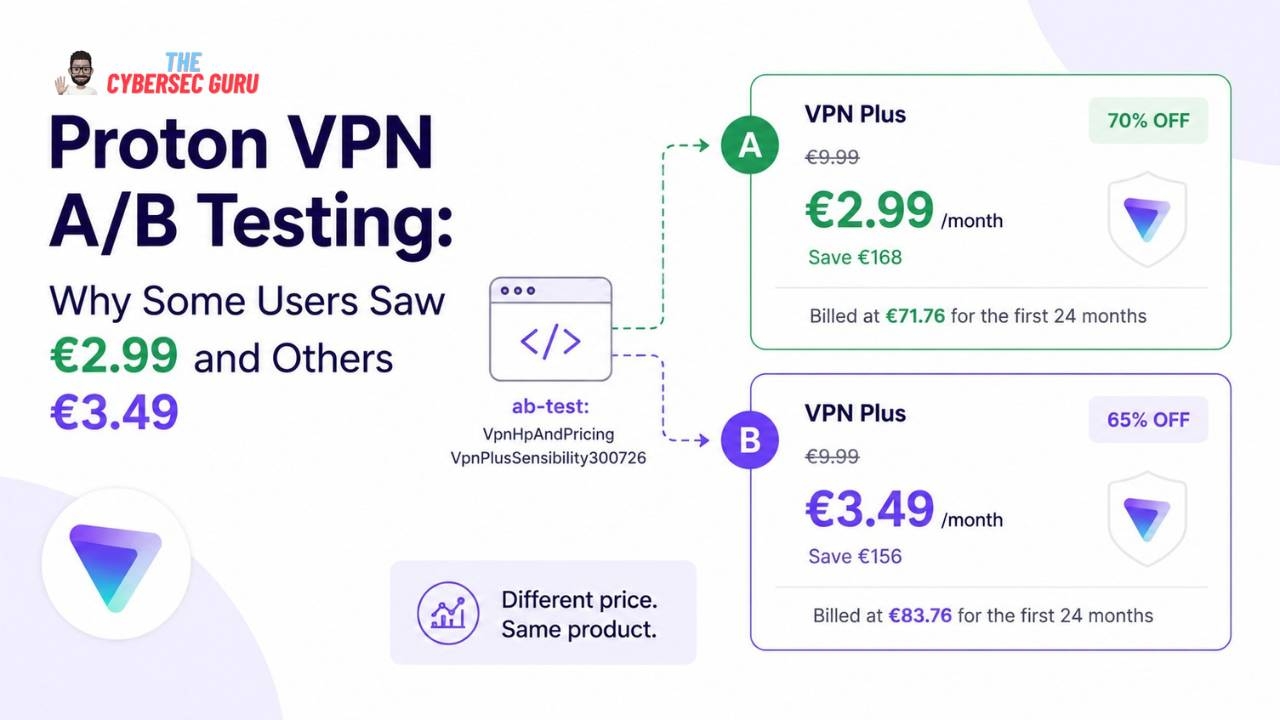
Proton VPN’s pricing page exposed an ab-test identifier linked to two VPN Plus prices: €2.99/month (70% off) and €3.49/month (65% off). Repeated testing produced B → A → B → A → B, with the variant matching the rendered price each time. €12 difference over 24 months.
Can someone articulate what is wrong with this? It intrinsically feels wrong to me, but when I think about it I dont really have any good reasoning why this would be bad.
We expect a standard price and it feels bad when we find out someone else got it cheaper.
But the consumer should be operating the same, they review the deal and if its a price they are willing to pay they go through with it.
It’s because despite what economists believe, prices are not determined fairly by the market but are dictated supply-side. So this kind of “testing” is one of the more blatant ways in which consumer trust is violated in the name of maximizing profits. It maves it obvious that you’re not paying a fair price for a serxice or product, but a price that was dictated for someone else’s convenience without taking your interests into account at all, violating the social tontract.
the standard price expectation is how it tricks the customer, if you open a webpage and go pay for something then you expect that the price you’re paying from the same vendor is set the same for everyone (or at least constant for your geographic location to accomodate for purchasing power). pretty much no customer would expect opening the page in another session to offer a better price, which is why they did it this way.
if people knew there’s a better price available, they’d not take the worse deal. and people in general don’t like having tricks pulled on them, especially if they’re meant to gauge how much they can get away with charging you.